Does your Instagram shout at you? Mine does. Every time I open it up – albeit with increasing reluctance – someone I didn’t previously know existed is sharing a “hack”. It could be for stopping my toddler from throwing a fit in the supermarket or how to button a shirt so I look less old. It’s interesting when gardening suggestions are thrown into the mix. Sometimes they’re nonsense (see growing new spring onions from the bottoms of old ones in saucers of water), sometimes they’re so helpful I stash them away with the unfulfilled intention to watch back in the future.
Lately, I’m being shown a lot of stuff about roses. Specifically, deadheading them. Roses are one of those plants that seem more high-maintenance than they are; before I grew them I was convinced they were the preserve of those people who are so serious about gardening that they have a foam kneeler (I still don’t own one of these).
But, as a flower grower pal once told me: “You’d have to be Cruella de Vil to kill a rose.” As long as they’re kept vaguely well fed and hacked back in the winter, roses tend to just keep going. I’ve mulched mine all summer, which helps with the hot weather we’ve been having, although I find that after the first couple of years a good root system can handle droughts.
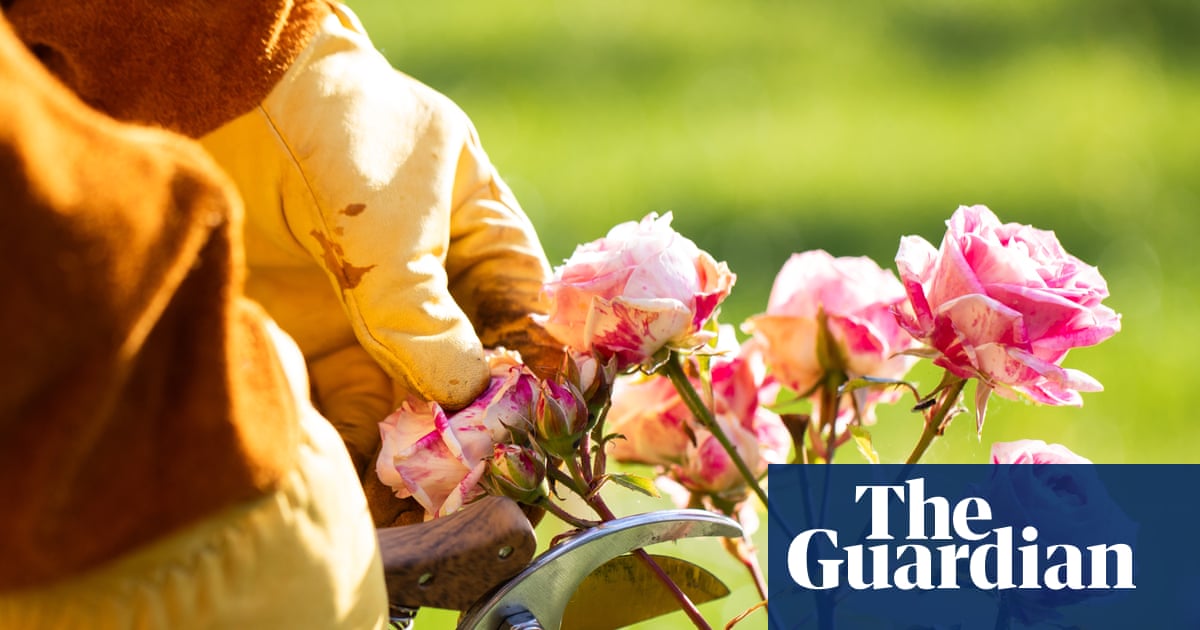
Roses do, however, benefit from deadheading – removing the flower heads once the blooms have faded. This encourages the plant to have further flushes of roses through the summer (and sometimes beyond), as it tricks the plant into thinking it needs to keep flowering in order to set seed.
There’s a lot of Instagram chat about the five-leaf rule: that when you deadhead a rose you don’t simply snip off the spent bud, but trace the stem down to the nearest clutch of five leaves, and cut just above those, instead. This means you’re promoting strong stem growth for future flowers.
after newsletter promotion
It’s the strong stem that’s key. There are lots of rules about roses (this is why I thought they were so tricky) but really you just want to prioritise sturdy growth for the future. If the stem looks good but there are only three leaves on it, cutting above that is a good shout. Avoid anything floppy, take the whole lot off instead at the next sturdy stem.
I know it may seem a bit savage, but you’ll get new leaf and flower stem growth from where you cut, rather than one gangly long stem. The same applies when you’re harvesting flowers for the kitchen table.
As for cutting, good sharp secateurs, ideally clean ones, are the way forward. At the end of summer, when we’ve had enough of deadheading, it’s important to leave rosehips (what the spent flowers turn into) in place, for the birds, insects and autumn interest.